Overview
Context: I led the UX design for a system that solves the identity gap in the tire industry. Once a tire leaves a factory, its identity becomes fragmented. I designed a platform to bridge this gap using blockchain technology.
The Goal: To create a persistent digital identity for every tire, allowing manufacturers, retailers, and customers to verify authenticity and track the product through its entire lifecycle.
Team
Product Manager
2 Business Analysts
UX Designer (Me)
Problem
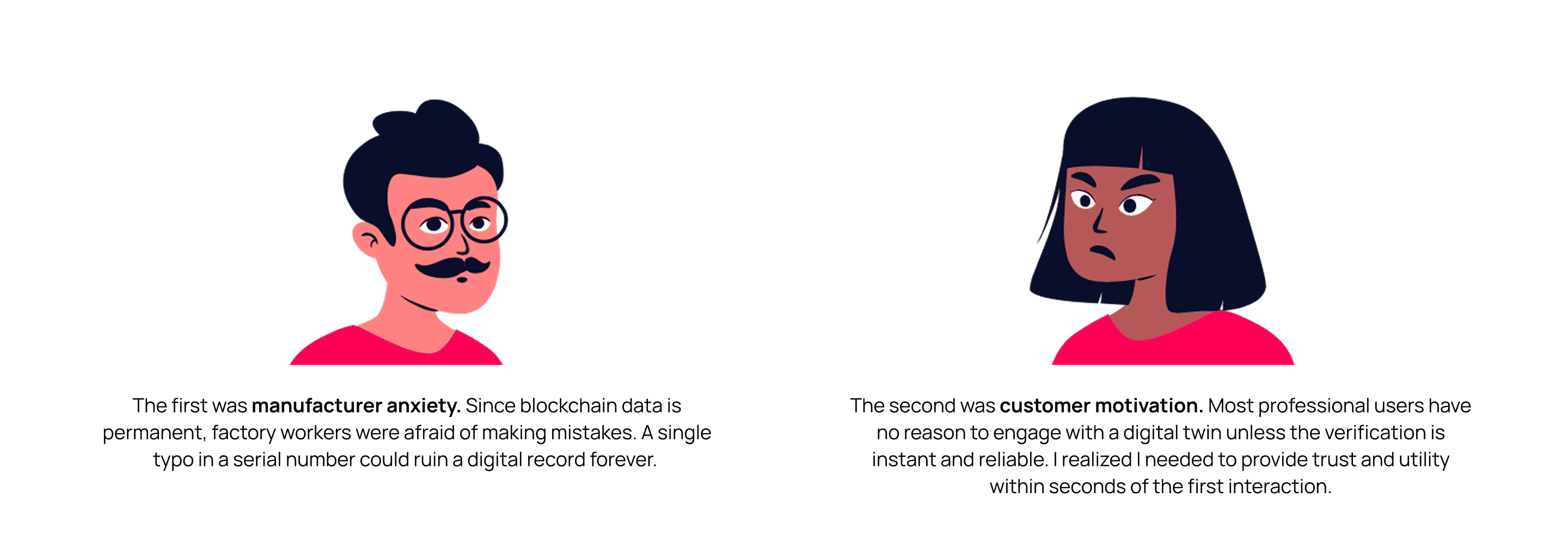
I found that tire data is currently scattered across paper warranties and siloed databases. This makes it impossible for customers to verify if a tire is genuine. During my discovery phase, I identified two major pain points.
Process
I followed a Lean UX approach because the technical limitations of the blockchain were evolving during the project. I focused on building a shared understanding with the engineering team.
Archetypes
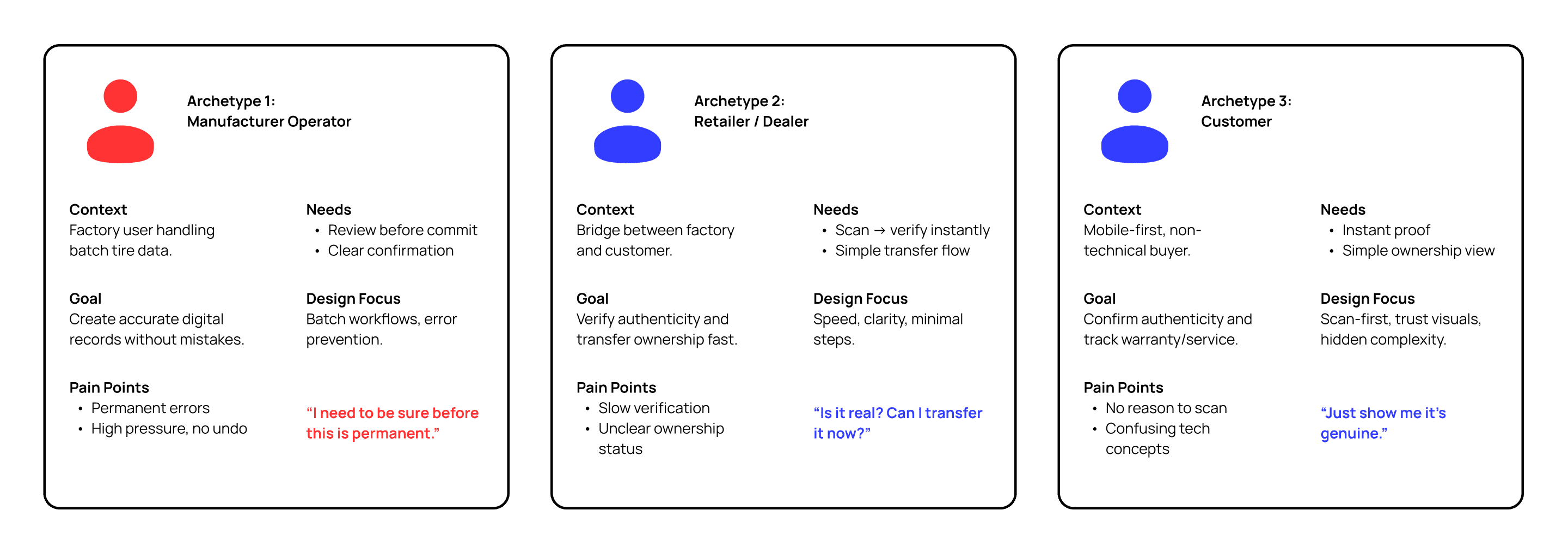
Manufacturer Operator: This user works in a high-speed factory environment. I focused their experience on batch processing and error prevention. They need to be absolutely sure of the data before it is committed to the blockchain as an immutable token.
Retailer: This user acts as the bridge between the factory and the final owner. I designed their flow to be an inventory and verification tool. They need to quickly scan a tire to confirm origin and initiate the transfer of ownership to their customer.
Customer: This user is often a commercial buyer or a high-end vehicle owner. They are mobile-first and non-technical. I focused on a frictionless experience where they can see proof of authenticity and a simple way to track service and warranty without needing to understand blockchain terminology.
Information Architecture + Wire-Framing
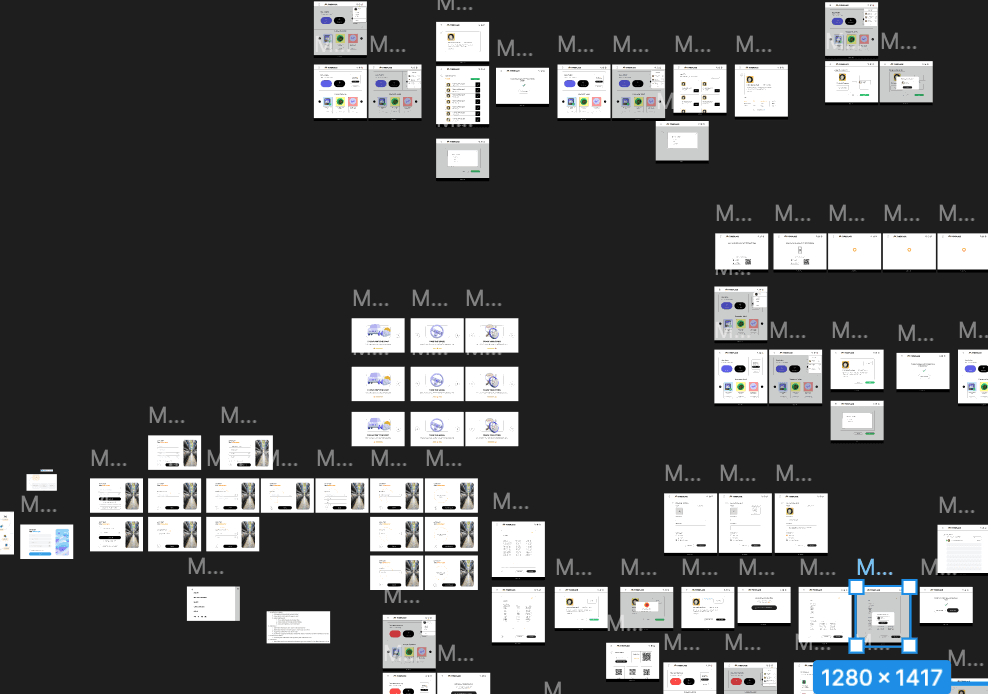
I designed a dual-stream architecture to separate high-complexity manufacturing tasks from the mobile interactions used in the field.
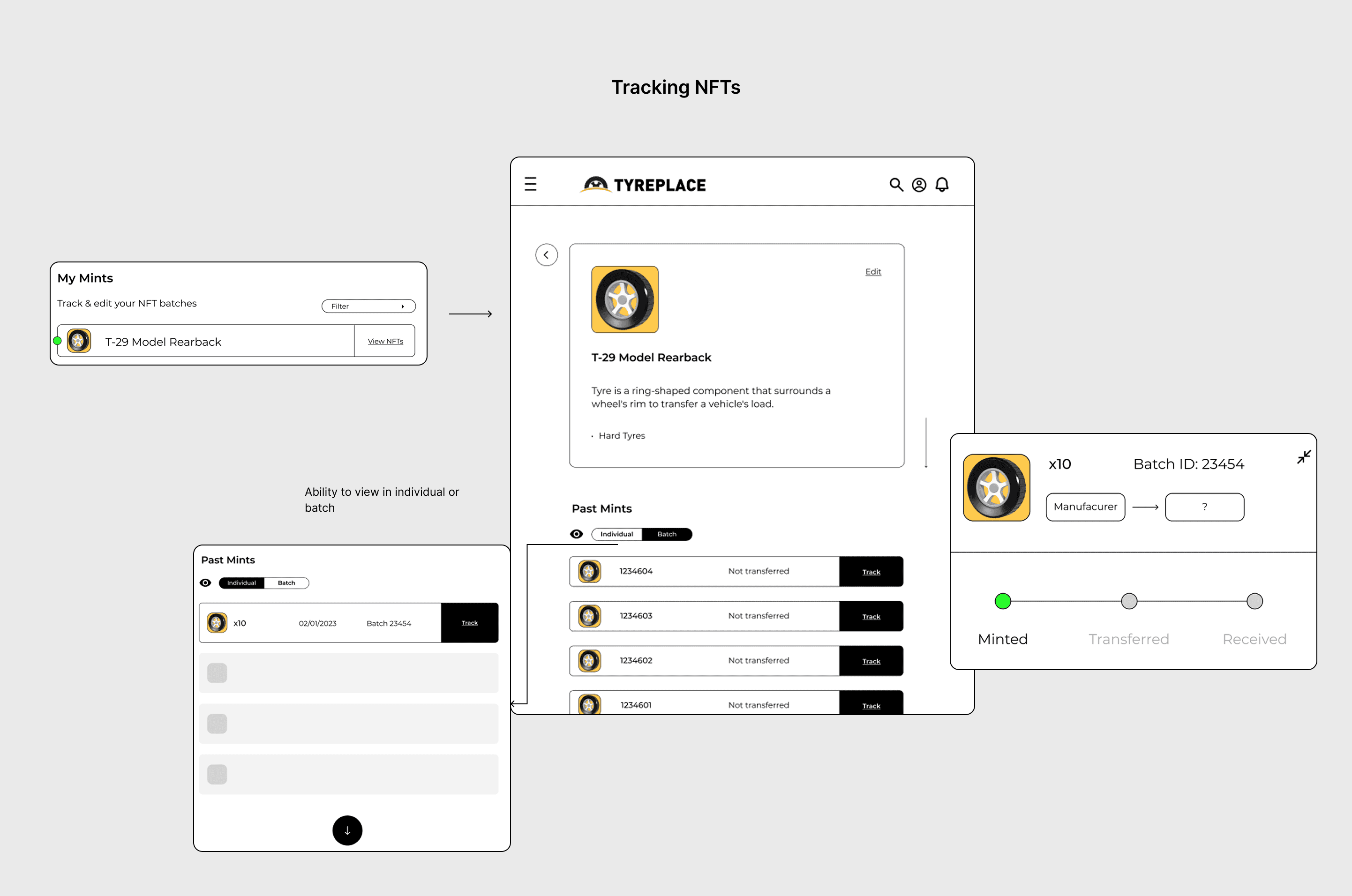
The manufacturer portal on desktop is organized around asset creation and batch health. I created a draft-to-review flow that ensures data is double-checked. The retailer and customer views are mobile-web based. They open directly to a camera scanner to reduce the time it takes to pull provenance data from the blockchain.
The Solution
I focused on three main design solutions to bridge the physical and digital worlds based on the app flow.
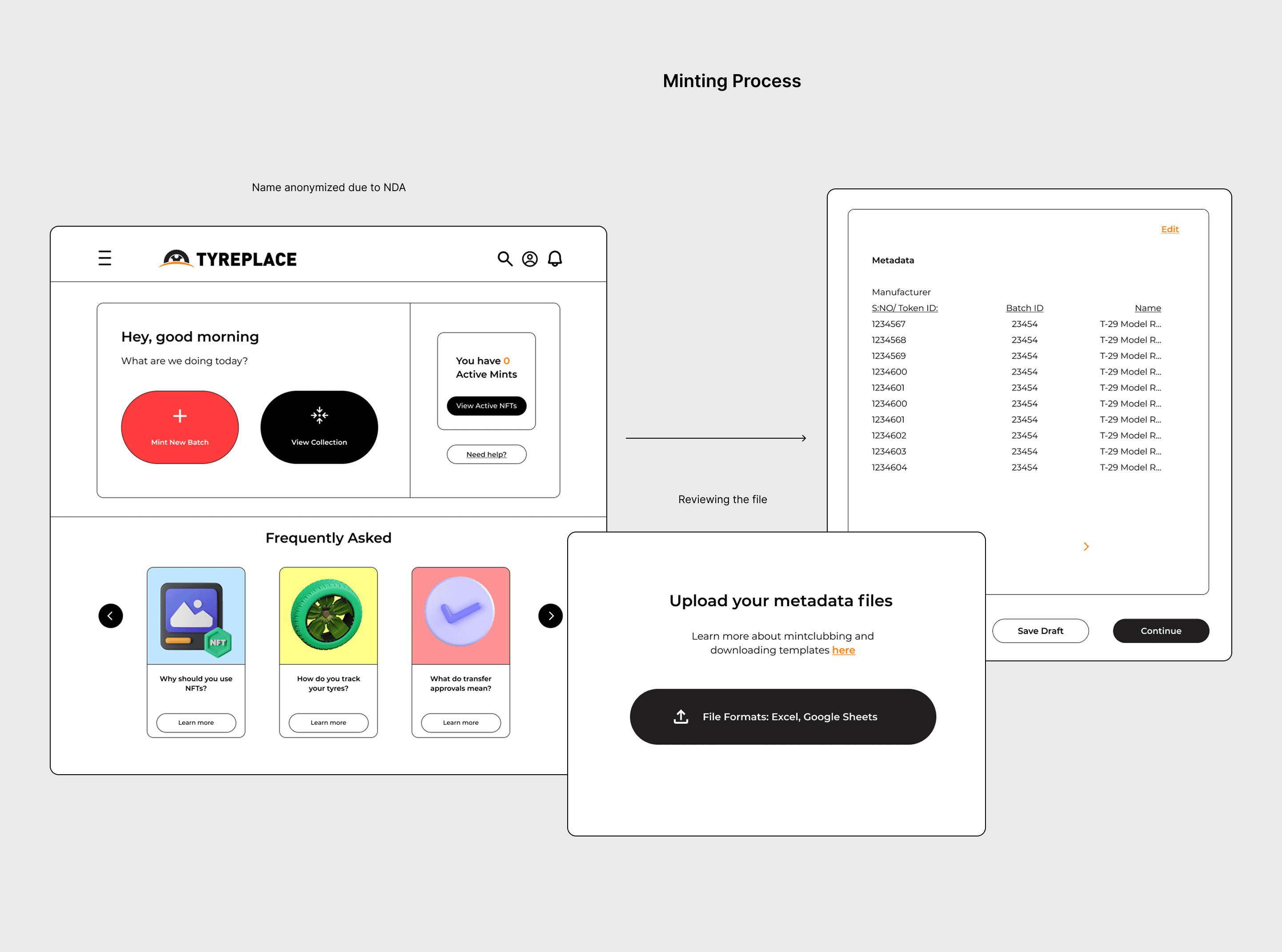
First, I created the safety-net entry for manufacturers. I built a structured data entry system with a mandatory review state. This allows operators to catch errors in serial numbers or compound types before the minting action.
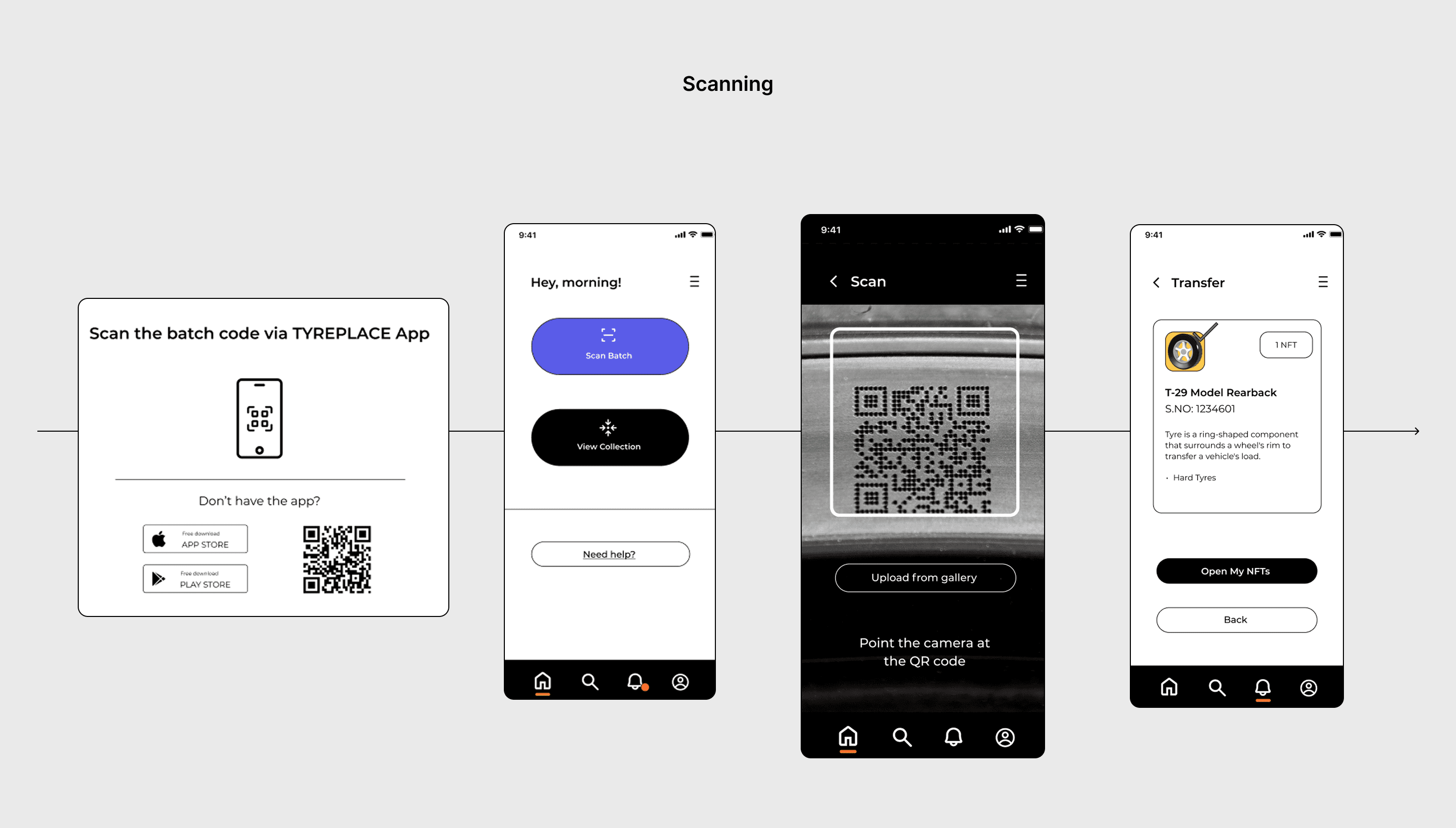
Second, I designed for instant verification. I built a scan-first flow for retailers and customers. The moment a user scans the QR code or NFC tag, it pulls a certificate of origin and maintenance history from the blockchain. This proves the tire is an original manufacturer product before any transaction occurs.

Third, I simplified the ownership transfer. I designed a claim flow where the retailer or customer connects a wallet to move the NFT from the manufacturer's inventory to their own. I abstracted the complexity so the user sees this as a digital warranty card rather than a technical crypto transaction.
Outcome and Learning
I delivered a system that turned a physical object into a living digital asset. Manufacturers gained a direct link to their products in the field, and retailers had a tool to prove they sell genuine goods.
I learned that trust is a primary UI component. In a phygital system, the visual confirmation of a scan is just as important as the code that runs it. I also learned that designing for the unhappy path, such as network delays or already-claimed assets, is what makes a technical product actually usable in a real-world retail environment.