Discover
1. Context
I worked on a project that explored how physical tires could be represented as digital assets. The aim was to make authenticity, ownership, and service history easy to access for both manufacturers and end users, without exposing the technical complexity behind the system.
2. Project Goal
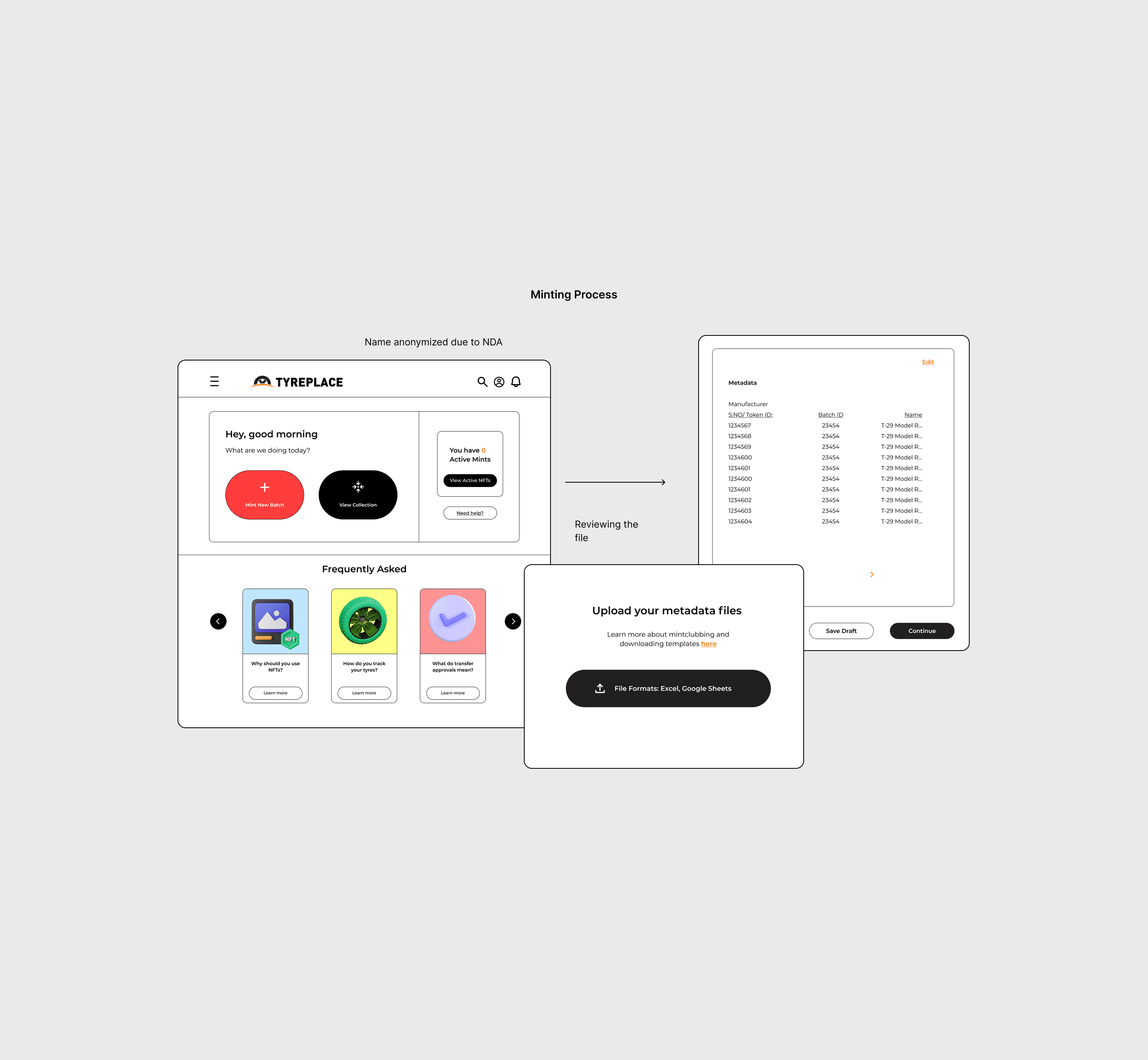
The goal was to design a clear and trustworthy experience that allows manufacturers to create digital records for tires, and customers to verify, claim, and track those assets throughout their lifecycle.
3. Problem
The underlying system was complex and irreversible by nature. Without careful UX, users could easily feel confused or unsure about actions like asset creation or ownership transfer. The challenge was to make these moments feel safe, understandable, and intentional.
Final Concept
4. Solution
I designed two connected experiences:
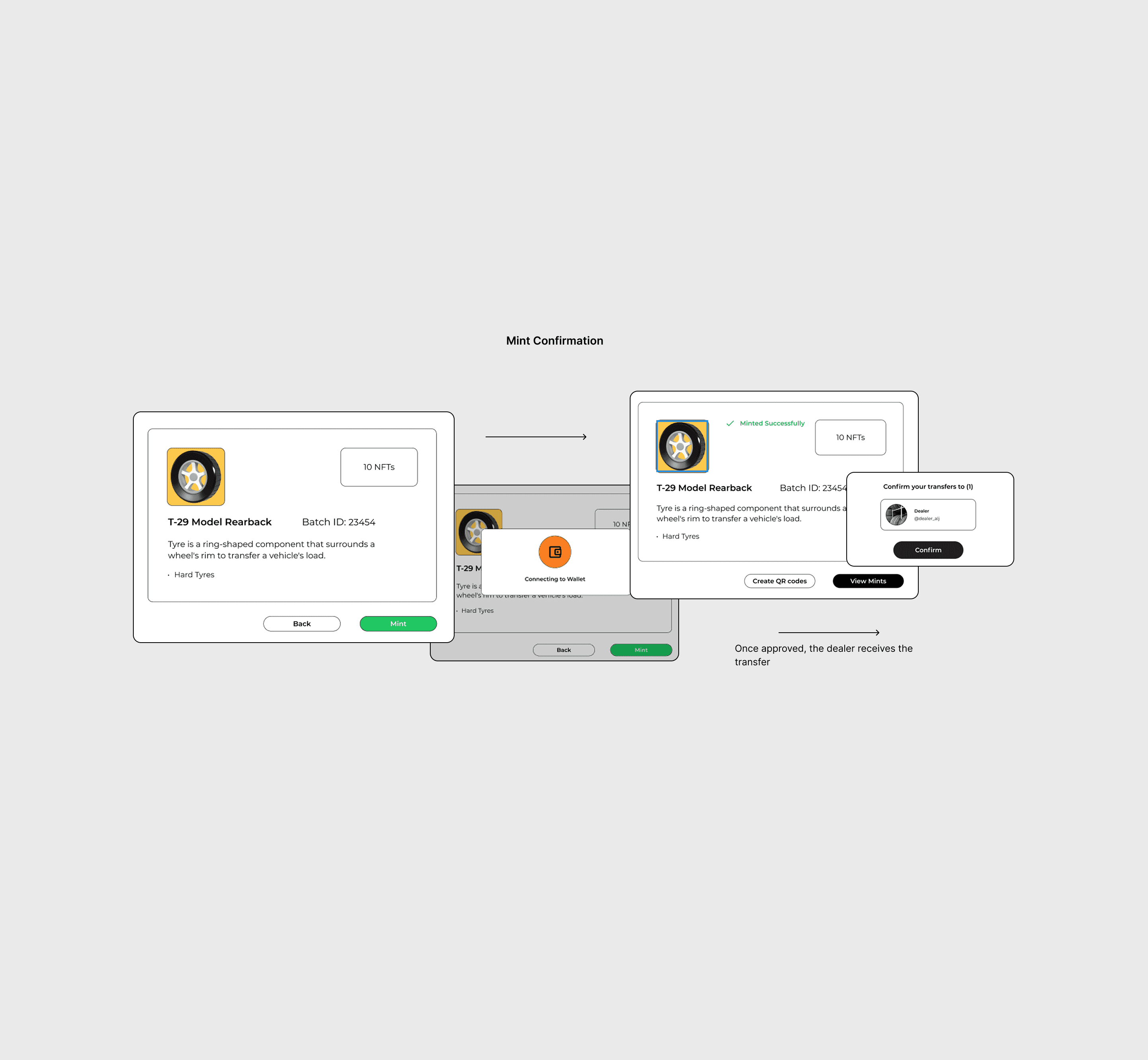
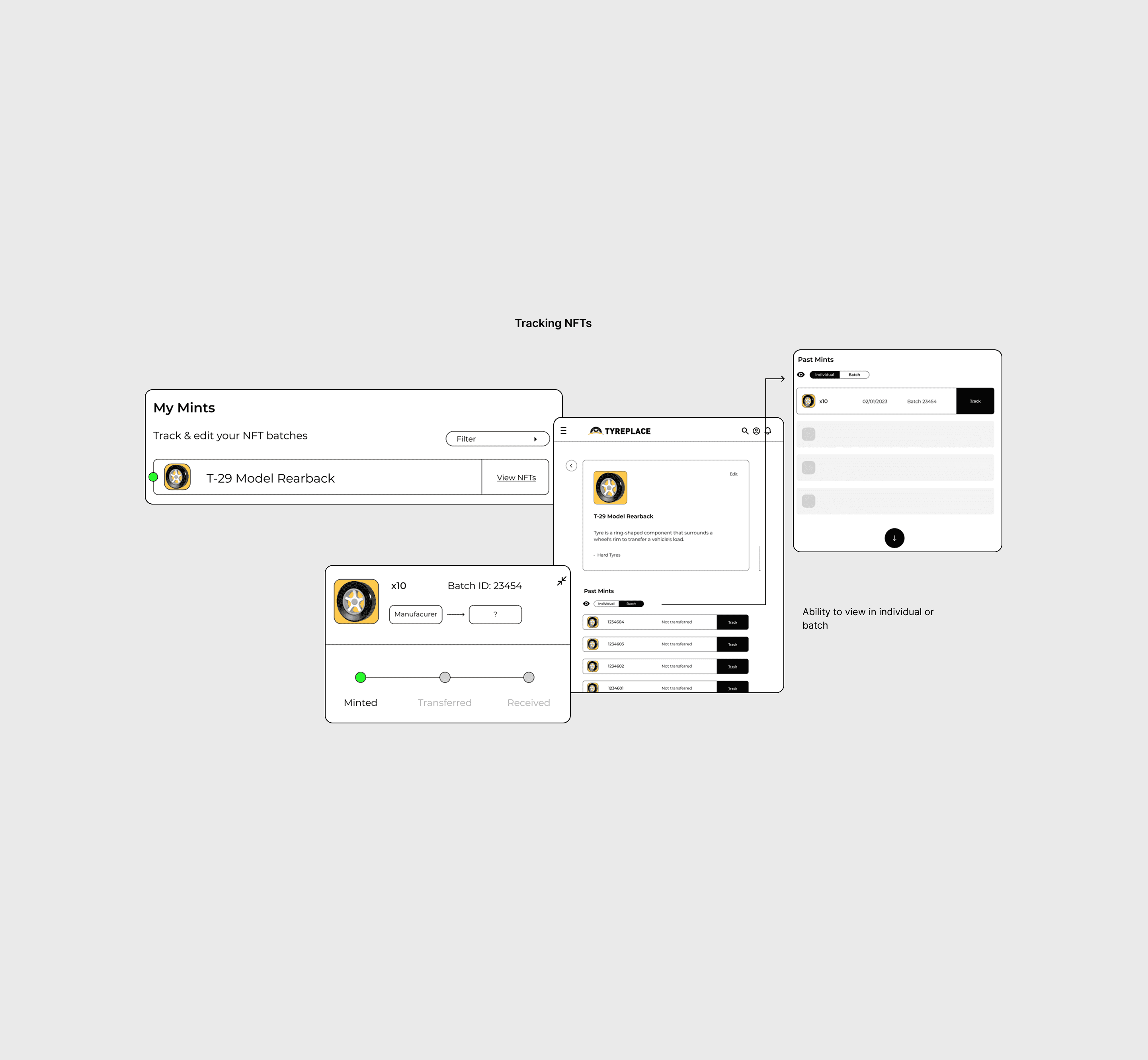
• A desktop flow for manufacturers to register tire data, create digital assets, and link them to physical identifiers like QR codes or NFC tags.
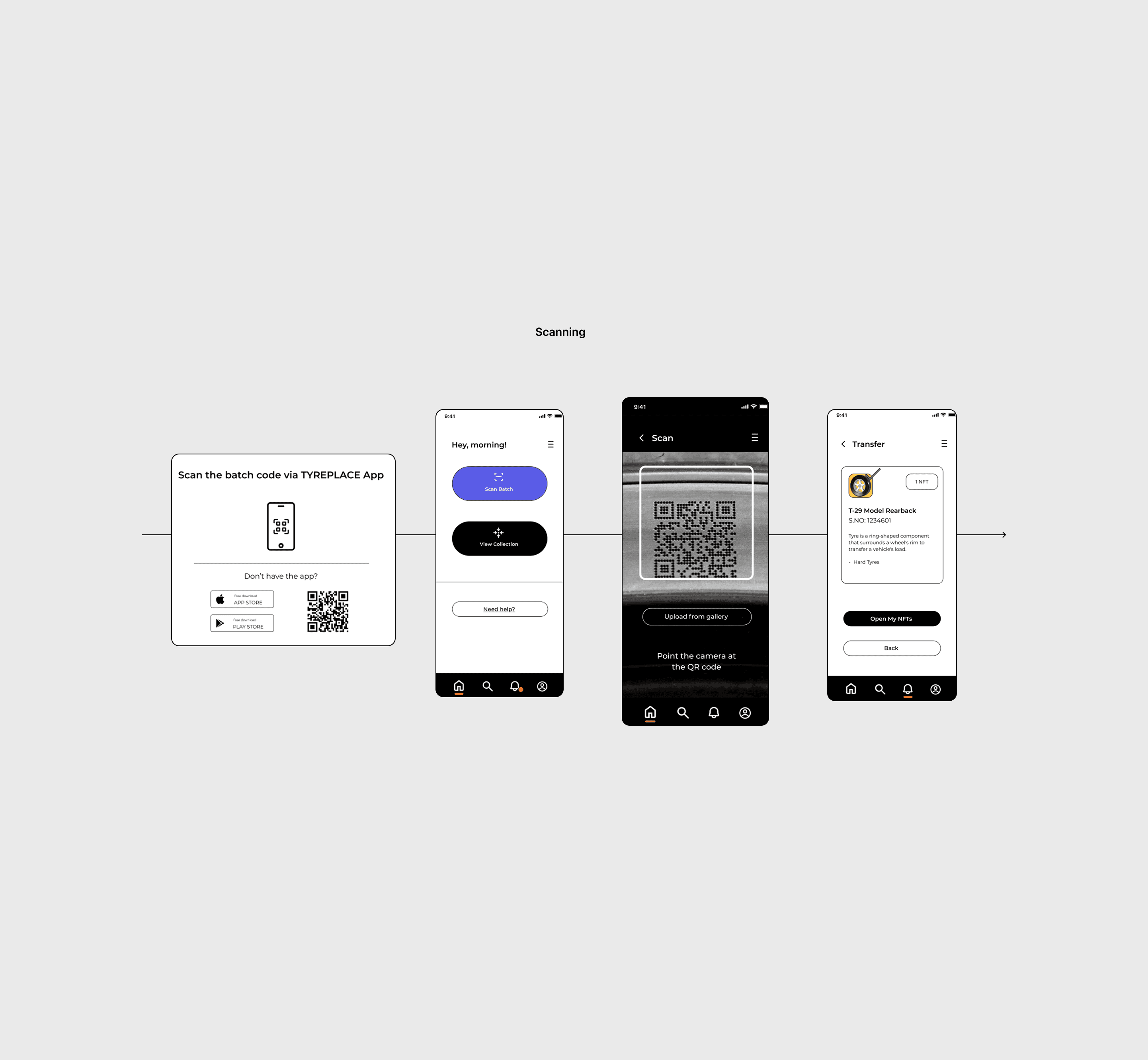
• A mobile experience for customers to scan a tire, verify its authenticity, claim ownership, and view service history and warranty information.
Both flows were designed to feel simple and guided, even though they were powered by complex backend processes.
5. Design Principles
• One clear action per screen: Each screen focused on a single primary action to reduce cognitive load.
• Quick and easy interactions: Scanning, claiming, and verifying were designed to happen in as few steps as possible.
• Make complexity invisible: Technical details stayed in the backend, while the UI focused on outcomes users cared about.
• Trust-first design: Clear confirmations and visual feedback were used at key moments like verification and ownership transfer.
• Lifecycle clarity: Information was presented as a timeline so users could easily understand the asset’s history over time.
6. Key Takeaways
This project made me more aware of how important design systems and consistency are, even when working on conceptual or exploratory work. While the focus here was on validating flows and ideas, I realised that investing more time in a shared component system would have helped the designs scale more cleanly across screens and platforms.